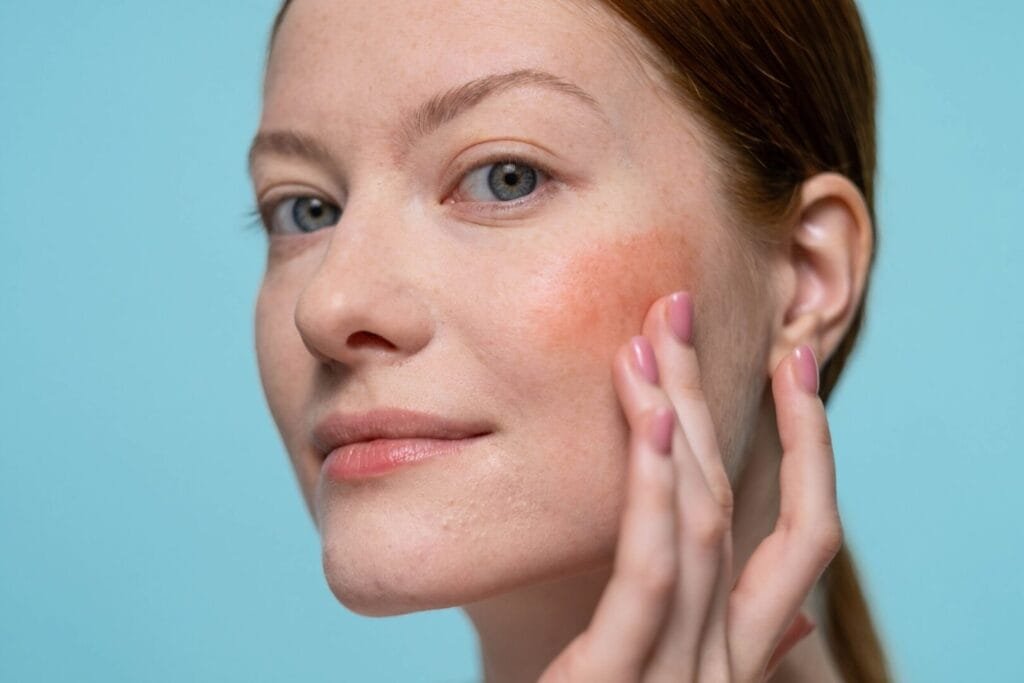
A simple guide to persistent facial redness, what causes it, the common signs of rosacea, and how treatment can help reduce symptoms.
Why Does Facial Redness Happen?
Facial redness is a common symptom that can occur for many different reasons. For some people, redness appears occasionally after exercise, alcohol, spicy foods or changes in temperature. For others, it becomes more persistent and may be present most of the time.
Redness happens when blood vessels near the surface of the skin widen, allowing more blood to flow through the area. While temporary redness is often normal, ongoing or worsening redness may be a sign of an underlying skin condition such as rosacea.
Could Rosacea Be Causing Your Red Face?
Rosacea is a long-term inflammatory skin condition that commonly affects the face. It often begins with episodes of flushing that come and go — over time, the redness may become more noticeable and remain present even when no obvious trigger is present. Rosacea is most commonly seen in adults over the age of 30.
- The cheeks
- The nose
- The forehead
- The chin
Many people live with rosacea for years before receiving a diagnosis because they assume the redness is simply sensitive skin, blushing or sun damage. Recognising the symptoms early can help you access appropriate treatment and reduce the impact on daily life.
Common Signs and Symptoms of Rosacea
Rosacea affects different people in different ways. Symptoms often come and go, with periods where the skin appears relatively calm followed by flare-ups where redness becomes more noticeable. The severity of symptoms can vary significantly from person to person.
Persistent facial redness
Frequent flushing
Visible blood vessels on the face
Burning or stinging sensations
Sensitive skin
Dry or rough patches of skin
Spots and bumps that may resemble acne
Some people experience mainly redness, while others develop additional symptoms such as inflammatory spots or skin sensitivity.
Rosacea vs Blushing: What’s the Difference?
Many people with rosacea initially believe they simply blush easily. While both conditions involve facial redness, there are some important differences.
Normal blushing
Usually temporary
Triggered by emotions such as embarrassment or excitement
Short-lived and completely normal
Rosacea-related redness
More persistent
Triggered by heat, alcohol, spicy foods, exercise, stress or temperature changes
Remains visible long after the trigger has passed
Unlike normal blushing, rosacea-related redness is often accompanied by other symptoms and tends to become more noticeable over time.
Other Causes of Facial Redness
Although rosacea is one of the most common causes of persistent facial redness, it is not the only possibility. In some cases, facial redness may be caused by a combination of factors. A professional assessment can be helpful if redness is persistent, worsening, or affecting your confidence.
- Eczema
- Seborrhoeic dermatitis
- Acne
- Allergic reactions
- Sun damage
- Contact dermatitis
- Certain medications
Identifying the underlying cause is an important step towards finding the most appropriate treatment.
When Should You Seek Treatment?
Many people delay seeking advice because they assume redness is something they simply have to live with. However, rosacea cannot usually be cured completely, but symptoms can often be managed effectively with the right treatment — and seeking advice early may help prevent symptoms from becoming more difficult to control.
- Redness is persistent and not improving on its own
- Symptoms are becoming more noticeable over time
- You experience frequent flare-ups
- Your skin feels uncomfortable or sensitive
- Symptoms are affecting your confidence
- Over-the-counter products have not helped
How Mirvaso Gel Can Help Reduce Redness
For people whose main symptom is persistent facial redness, prescription treatment may be an option. Mirvaso Gel contains brimonidine — a medication that works by narrowing the small blood vessels in the skin, reducing excess blood flow to the face and decreasing visible redness.
What to know about Mirvaso
Many people notice an improvement within the first few hours of application. Mirvaso is specifically designed to help manage the facial redness associated with rosacea and can be used as part of a wider treatment plan. Like all prescription treatments, it may not be suitable for everyone — which is why a consultation is important before starting treatment.
A healthcare professional can assess your symptoms and determine whether Mirvaso is an appropriate option for you.
What to Do Next
If you’re experiencing persistent facial redness and think rosacea may be the cause, the next step is to seek professional advice. Our pharmacy team can help assess your symptoms and discuss the treatment options available.
If appropriate, we may be able to recommend prescription treatments such as Mirvaso Gel to help manage redness and improve your symptoms. With the right treatment and skincare routine, many people find their redness becomes easier to control and their confidence improves significantly.