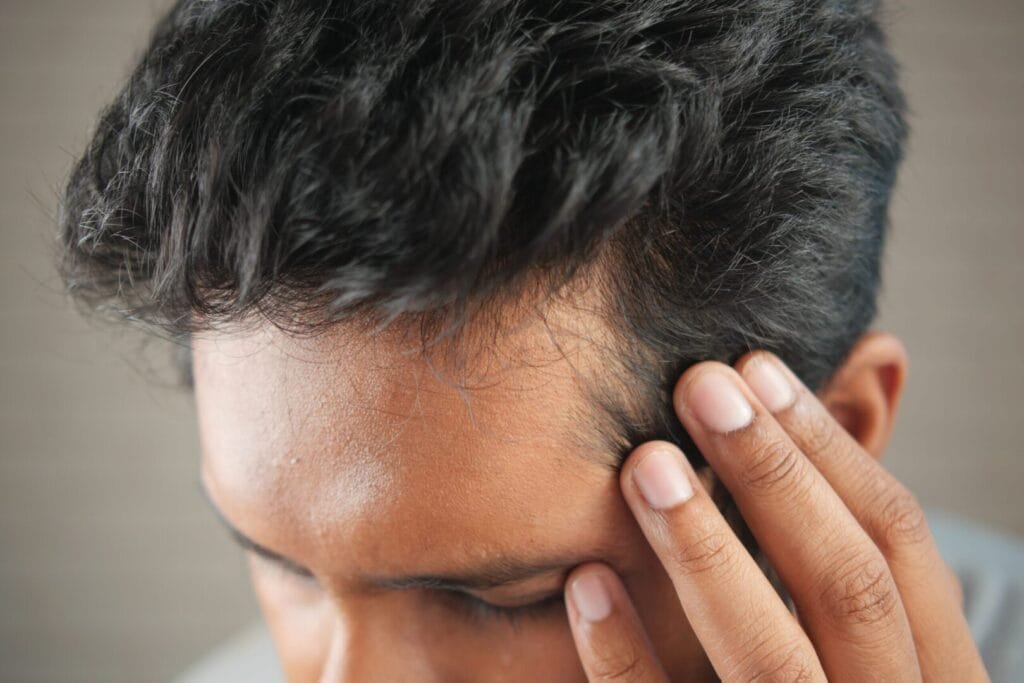
A simple guide to why male pattern hair loss happens, what causes it, and what treatments can help slow or reverse the process.
What Is Male Pattern Baldness?
Male pattern baldness, also known as androgenetic alopecia, is the most common cause of hair loss in men. It typically develops gradually over time and follows a recognisable pattern — many men first notice a receding hairline around the temples, thinning at the crown, or both.
While hair loss can affect confidence and self-esteem, it’s important to know that male pattern baldness is a common medical condition and effective treatments are available. The earlier it is identified, the more likely treatment is to help preserve existing hair and support regrowth.
Why Does Male Pattern Baldness Happen?
Male pattern baldness is primarily caused by a combination of genetics, hormones, and age. If male relatives such as your father, grandfather, or brothers have experienced hair loss, you may be more likely to develop it yourself.
However, genetics alone are not responsible. Hair loss occurs because certain hair follicles become increasingly sensitive to a hormone called dihydrotestosterone (DHT). Over time, this sensitivity causes affected hair follicles to shrink and produce thinner, weaker hairs until growth eventually stops altogether.
Understanding the Role of DHT
DHT is a naturally occurring hormone derived from testosterone. In men who are genetically susceptible to hair loss, DHT binds to receptors in hair follicles on the scalp and gradually causes them to shrink — a process known as follicular miniaturisation.
As follicles become smaller
- Hair grows back thinner and shorter
- Hair loses pigmentation and density
- The growth phase becomes shorter
- More hair enters the shedding phase
- Some follicles eventually stop producing visible hair
This is why hair loss often appears to progress gradually over several years rather than happening suddenly.
How Male Pattern Hair Loss Progresses
Male pattern baldness usually follows a predictable pattern. The rate of progression varies between individuals — some men experience slow changes over decades, while others notice significant hair loss within a few years.
Stage 1
Early Stage
- A receding hairline
- Thinning around the temples
- Increased hair shedding
Stage 2
Moderate Stage
- Visible thinning at the crown
- A widening area of reduced density
- Difficulty styling hair as normal
Stage 3
Advanced Stage
- Thinning areas may gradually join together
- Hair remains around the sides and back of the scalp
- The top of the scalp becomes significantly thinner or bald
Who Is Most Likely to Experience Hair Loss?
Male pattern baldness can affect men at almost any adult age. It is different from sudden hair loss caused by illness, medications, nutritional deficiencies, or scalp conditions — which is why a proper assessment is important before starting treatment.
- You have a family history of hair loss
- You noticed hair thinning in your twenties or thirties
- Male relatives developed similar patterns of hair loss
- You have gradual thinning rather than sudden hair loss
Can Male Pattern Baldness Be Prevented?
Because genetics play a major role, male pattern baldness cannot always be completely prevented. However, treatment can often slow progression and help maintain existing hair.
Many men mistakenly believe they should wait until hair loss becomes severe before seeking treatment. In reality, treatment is generally most effective when started early, while hair follicles are still active. Once a follicle has been inactive for a prolonged period, regrowth becomes much less likely.
What Treatments Are Available?
There are two main evidence-based treatments commonly used for male pattern hair loss, which can be used individually or in combination.
Prescription Tablet · Once Daily
Finasteride
Works by reducing the conversion of testosterone into DHT, lowering DHT levels within the scalp. By reducing DHT exposure, finasteride helps slow or stop further follicle miniaturisation and may support regrowth in some men.
Topical Treatment · Applied to Scalp
Minoxidil
Works by stimulating hair follicles and prolonging the growth phase of the hair cycle. This can help improve hair density and encourage regrowth in suitable candidates — and works through a different mechanism to finasteride.
Most Effective Option
Combination Treatment
Because finasteride and minoxidil work through different mechanisms, they can often be used together. For many men, combination treatment provides the greatest opportunity to maintain existing hair and maximise regrowth.
Why Early Treatment Matters
One of the most important factors affecting success is timing. Hair loss treatments work best when hair follicles are still producing hair. Waiting until significant baldness has already developed can limit the potential benefit of treatment.
Preserve existing hair before further loss occurs
Slow progression of hair loss over time
Improve the likelihood of visible regrowth
Reduce the need for more extensive treatment later
What to Do Next
If you’ve noticed a receding hairline, thinning at the crown, or gradual hair loss, the next step is to understand whether male pattern baldness is the cause. Through our hair loss service, we can assess your symptoms, medical history, and suitability for treatment.
Following assessment, we can recommend the most appropriate option — whether that is finasteride, minoxidil, or combination therapy. Starting treatment early gives you the best opportunity to preserve your hair and achieve the best possible outcome.