How shingles differs from other common skin rashes, the symptoms that may suggest shingles, and when to seek prompt treatment.
What Is Shingles?
Shingles is a viral infection caused by the varicella-zoster virus, the same virus that causes chickenpox.
After recovering from chickenpox, the virus remains dormant within the nervous system. Years or even decades later, it can reactivate and cause shingles.
Unlike many common skin rashes, shingles affects the nerves as well as the skin, which is why it often causes pain, tingling, burning, or sensitivity before a rash appears.
What Does a Shingles Rash Look Like?
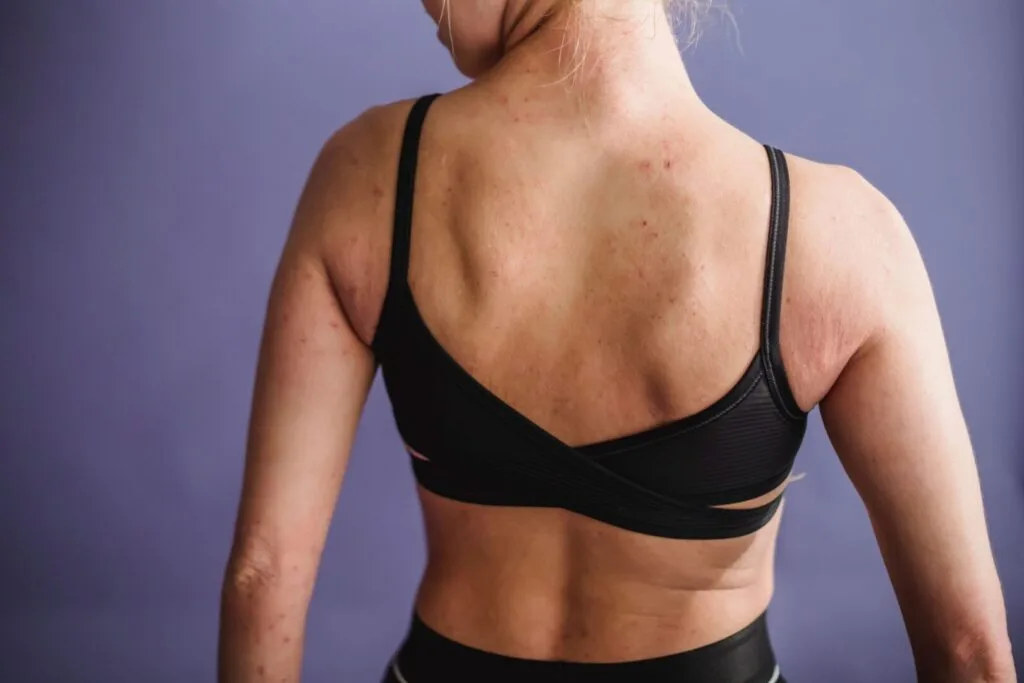
A shingles rash has several features that can help distinguish it from other common skin conditions.
Appears on one side of the body
Follows the path of a nerve
Causes clusters of fluid-filled blisters
Is often painful rather than itchy
Develops over several days
Eventually crusts over and heals
Common areas affected include the chest, abdomen, back, waist, and face. Most people experience symptoms on only one side of the body.
How Shingles Differs From Eczema
Eczema causes dry, inflamed, itchy skin and can affect multiple areas of the body at the same time.
Eczema usually
- Feels very itchy rather than painful
- Can affect both sides of the body
- Tends to flare repeatedly over time
Shingles usually
- May cause pain before a rash appears
- Often follows a nerve pathway
- Typically affects one side of the body
While eczema can occasionally blister, it does not usually produce the characteristic painful blistering pattern seen with shingles.
How Shingles Differs From Heat Rash
Heat rash develops when sweat becomes trapped beneath the skin. It commonly occurs during hot weather and often affects the chest, back, neck, and skin folds.
Heat rash typically causes small red spots or bumps and is usually mildly uncomfortable or itchy rather than painful.
Unlike shingles, heat rash does not cause blistering along a nerve pathway or the burning pain often associated with shingles.
How Shingles Differs From Allergic Skin Reactions
Allergic reactions can produce widespread redness, itching, hives, or swelling.
Appear suddenly
Affect multiple areas of the body
Cause itching rather than pain
Improve once the trigger is removed
Shingles is usually more localised and commonly causes pain before visible skin changes appear.
How Shingles Differs From Insect Bites
Insect bites can cause red, raised bumps that may resemble the early stages of shingles.
Insect bites usually
- Occur in small clusters
- Tend to be itchy
- Do not follow a nerve distribution
- Rarely cause blistering over a large area
Shingles is more likely if
- Pain develops before the rash
- The rash follows a band-like pattern
- Symptoms are on one side of the body
Symptoms That Suggest It Could Be Shingles
Although many rashes can look similar initially, several symptoms strongly suggest shingles.
Shingles warning signs
- Burning or tingling before the rash appears
- Pain on one side of the body
- A stripe or band-shaped rash
- Fluid-filled blisters
- Skin sensitivity to touch
- Increasing pain as the rash develops
Many people also feel generally unwell before or during an outbreak.
When Should You Seek Medical Advice?
Prompt assessment is important because antiviral treatment is most effective when started early.
Seek advice if
- You think you may have shingles
- The rash appeared within the last few days
- You are over 50 years old
- The rash is painful
- New blisters are continuing to appear
- Symptoms are worsening
Urgent assessment is particularly important if shingles affects the face or eyes.
Under the NHS Pharmacy First service, pharmacists can assess eligible adults with suspected shingles and may be able to supply antiviral treatment where appropriate. Treatment is generally most beneficial when started soon after the rash develops.
How Pharmacy First Shingles Treatment Can Help
Pharmacists can assess symptoms, confirm whether shingles is likely, and determine whether antiviral treatment may be suitable.
For eligible patients, treatment may be supplied through the NHS Pharmacy First service without needing a GP appointment.
Why early treatment matters
- Antiviral medicines work best when started promptly after symptom onset
- Treatment can help reduce the severity and duration of the infection
- If symptoms require further investigation, we can refer you to the most appropriate healthcare service
What to Do Next
If you have developed a painful rash and are unsure whether it could be shingles, do not ignore the symptoms.
Early assessment can help ensure you receive the most appropriate treatment and reduce the risk of complications.
Our pharmacy offers confidential shingles assessments through the NHS Pharmacy First service. If you think you may have shingles, contact our pharmacy team as soon as possible and we will be happy to help.