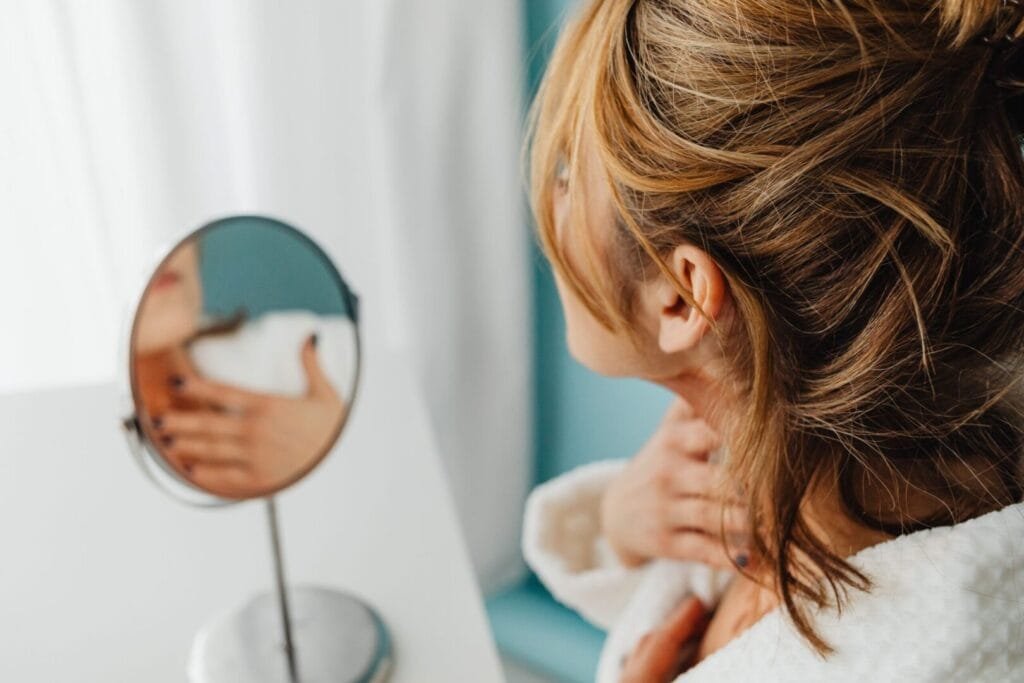
A guide to how rosacea affects skin sensitivity, which ingredients to look for and avoid, and how to build a simple routine that supports healthier-looking skin.
Why Rosacea Makes Skin More Sensitive
Rosacea doesn’t just cause redness. Many people with rosacea have a weakened skin barrier, which means their skin is less effective at protecting itself from irritation and environmental triggers. This is one reason why products designed for oily, acne-prone or normal skin can sometimes make rosacea symptoms worse.
Easily irritated by skincare products and environmental changes
More prone to dryness
More likely to sting or burn
Reactive to weather changes
Understanding that rosacea affects the skin barrier is often the first step towards creating a routine that works with your skin rather than against it.
The Most Common Skincare Mistakes
Many patients unknowingly make their rosacea symptoms worse through well-intentioned skincare habits. Rosacea-prone skin often responds better to a simple, gentle routine that focuses on supporting the skin barrier — in many cases, less is more.
Over-cleansing the skin
Using harsh exfoliants
Applying too many active ingredients at once
Frequently switching products
Using heavily fragranced skincare
Scrubbing the skin aggressively
Choosing a Gentle Cleanser
The wrong cleanser can leave rosacea-prone skin feeling tight, dry and irritated. A cleanser that is too harsh can strip away natural oils, increase sensitivity and make redness more noticeable. Micellar cleansers, cream cleansers and products specifically formulated for sensitive skin are often well tolerated.
- Gentle, fragrance-free and non-foaming or low-foaming
- Designed for sensitive skin
- Free from harsh exfoliating ingredients
- Avoid products that leave the skin feeling “squeaky clean”
Cleansing tips
Use lukewarm water — never hot. Gently massage the cleanser into the skin using your fingertips. Avoid washcloths or abrasive tools. Pat the skin dry rather than rubbing. Over-cleansing can worsen symptoms — twice daily is usually sufficient.
Why Moisturising Matters
Rosacea-prone skin often struggles to retain moisture effectively. When the skin barrier becomes compromised, irritants can penetrate more easily, leading to increased redness, dryness and sensitivity. Regular moisturising helps strengthen the skin’s natural protective barrier and can make the skin less reactive to everyday triggers.
Even if your skin feels oily at times, moisturising is still important. Lightweight, fragrance-free formulations designed for sensitive skin tend to provide the best balance between comfort and hydration. Consistency is often more important than finding the “perfect” product.
The Importance of Daily SPF
Sun exposure is one of the most common rosacea triggers. Even on cloudy days, ultraviolet (UV) radiation can contribute to redness, inflammation and flare-ups. Daily sun protection is one of the most effective long-term investments you can make for your skin.
- Broad-spectrum protection
- Mineral-based sunscreen where possible
- SPF 30 or higher
- Products suitable for sensitive skin
Many people find that modern facial sunscreens are far more comfortable and lightweight than older formulations.
Ingredients to Avoid and Ingredients to Look For
Not every ingredient affects everyone in the same way, but some are more likely to irritate rosacea-prone skin while others help support and soothe the skin barrier. Introducing new products gradually can help identify which ingredients your skin tolerates well.
May trigger rosacea
Alcohol-based products
Strong fragrances
Menthol
Witch hazel
Harsh exfoliating acids
Certain essential oils
Usually well tolerated
Ceramides
Glycerin
Hyaluronic acid
Niacinamide
Panthenol
Colloidal oatmeal
Everyone’s skin is different, so it is still important to monitor how your skin responds even to well-tolerated ingredients.
Can You Wear Makeup With Rosacea?
Yes. Many people with rosacea wear makeup comfortably as part of their daily routine — some patients find that makeup helps improve confidence while managing visible redness. The goal is to minimise irritation while still allowing you to feel comfortable and confident.
- Choose fragrance-free products designed for sensitive skin
- Non-comedogenic, lightweight foundations are often well tolerated
- Remove makeup gently at the end of the day using a suitable cleanser
How Mirvaso Fits Into Your Daily Skincare Routine
For some people, skincare alone is not enough to control persistent facial redness. Mirvaso Gel contains brimonidine, which works by narrowing the small blood vessels in the skin that contribute to facial redness.
Incorporating Mirvaso into your routine
When prescribed, Mirvaso is usually applied to clean, dry skin as directed by your healthcare professional. Many patients choose to incorporate it into their morning routine before applying moisturiser, sunscreen or makeup. During a consultation, our pharmacy team can explain exactly how to use Mirvaso alongside your existing skincare products.
A Simple Rosacea-Friendly Morning and Evening Routine
Many people benefit from keeping their routine simple and consistent. A straightforward routine that supports the skin barrier is usually easier to maintain and less likely to cause irritation.
Step by step
Morning
Cleanse with a gentle cleanser
Apply Mirvaso if prescribed
Apply a suitable moisturiser
Finish with SPF 30 or higher
Step by step
Evening
Remove makeup if worn
Cleanse gently
Apply moisturiser
Use any additional prescribed treatments as directed
Consistency is often more important than having a large number of products.
What to Do Next
If you’re struggling with rosacea and sensitive skin, you’re not alone. Our pharmacy team can help you understand your symptoms, review your current skincare routine, and discuss treatment options where appropriate.
With the right combination of skincare, trigger management and treatment, many people find they can achieve better control of their rosacea and feel more confident in their skin.