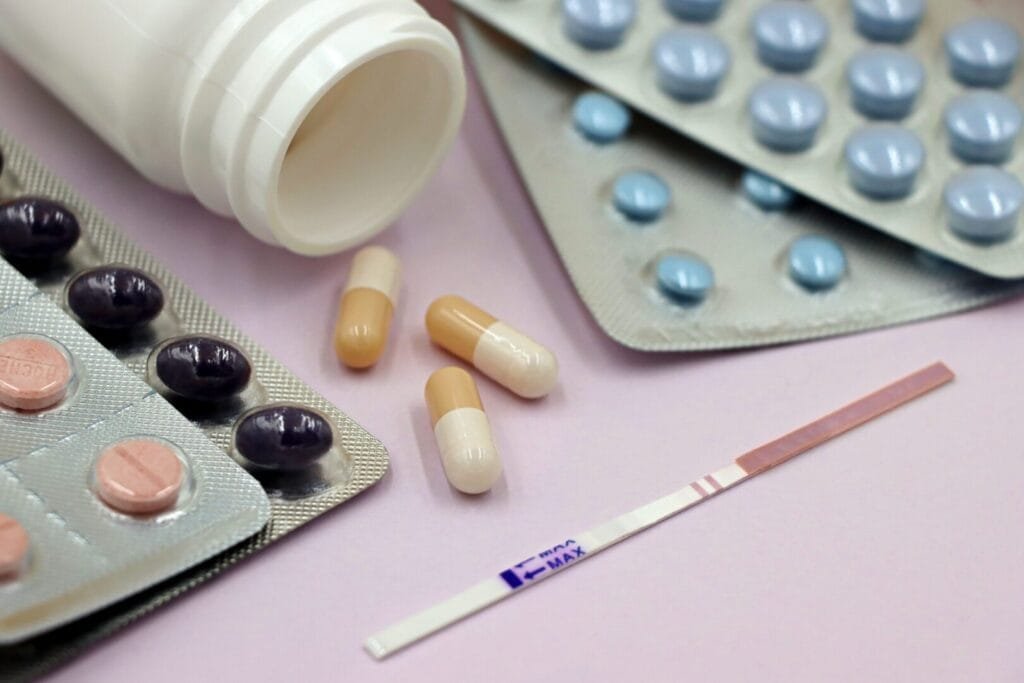
A guide to the differences between the combined pill and the progesterone-only pill, how they work, and what factors may influence which option is most suitable for you.
Understanding the Two Main Pill Types
There are two main types of contraceptive pill available in the UK: the combined contraceptive pill, and the progesterone-only pill (often called the mini pill). Both are effective forms of contraception when taken correctly, but they contain different hormones and work in slightly different ways.
A pharmacist or clinician will consider your medical history, current health and individual circumstances when recommending the most appropriate option.
How the Combined Pill Works
The combined contraceptive pill contains two hormones — oestrogen and progestogen — that work together to prevent pregnancy. Because it prevents ovulation, the combined pill is a highly effective method of contraception when taken correctly. There are many different brands and formulations available, allowing treatment to be tailored to individual needs.
- Stopping ovulation (the release of an egg)
- Thickening cervical mucus, making it harder for sperm to reach an egg
- Thinning the lining of the womb
How the Mini Pill Works
The mini pill (progesterone-only pill) contains a single hormone called progestogen. It is often a suitable option for people who cannot take oestrogen-containing contraception, and many modern mini pills prevent ovulation in a similar way to the combined pill, making them highly effective when used correctly.
- Preventing ovulation
- Thickening cervical mucus
- Altering the lining of the womb
Benefits of Each Option
Both pill types offer effective contraception, but each has its own advantages depending on individual circumstances.
Combined pill
May help regulate periods
Can reduce heavy menstrual bleeding
May improve period pain
Can improve acne symptoms
Allows predictable bleeding patterns
Mini pill
Suitable for those who cannot take oestrogen
Can be used if you experience migraines with aura
Suitable for those who smoke and are over 35
Can be used while breastfeeding
Suitable for a wider range of individuals
Possible Side Effects
As with any medication, contraceptive pills can cause side effects, although many people experience few or none. Common side effects can include headaches, nausea, breast tenderness, mood changes and changes in bleeding patterns.
One of the most noticeable differences between the two pill types relates to periods:
Combined pill — periods
Regular monthly bleeding
More predictable cycles
Often lighter periods
Mini pill — periods
Irregular bleeding, especially in the first few months
Spotting between periods
Lighter periods or no periods at all
These changes are usually not harmful but can take time to settle.
Who Should Avoid Certain Pill Types?
Not every contraceptive pill is suitable for every person. Suitability depends on individual circumstances, which is why a consultation is important before starting treatment. A pharmacist will ask questions about your health and medical history to help identify the safest and most appropriate option.
The combined pill may not be recommended if you
- Have certain cardiovascular risk factors
- Have a history of blood clots
- Experience migraines with aura
- Have certain medical conditions affecting blood vessels
- Smoke and are over 35 years of age
In these situations, the mini pill may be a safer option.
Lifestyle Factors That Influence Choice
Your day-to-day lifestyle can also play a role when choosing contraception. The best contraceptive pill is often the one that fits comfortably into your lifestyle while meeting your health needs — which is why individualised advice is so valuable.
Combined pill may suit you if
You would like more predictable periods
You experience troublesome menstrual symptoms
Oestrogen-containing contraception is suitable for you
Mini pill may suit you if
You cannot take oestrogen
You are breastfeeding
You have specific medical risk factors
You would prefer a progesterone-only option
Getting Advice From Your Pharmacy
Many community pharmacies now provide NHS oral contraception services, making it easier to access contraception without needing a GP appointment. This allows many people to start or continue contraception quickly and conveniently through their local pharmacy.
- Discuss your contraceptive needs and review your medical history
- Explain the differences between the combined pill and mini pill
- Assess which option may be most suitable for you
- Answer questions about effectiveness and side effects
- Provide oral contraception through NHS-funded services where appropriate
- Offer ongoing support and advice