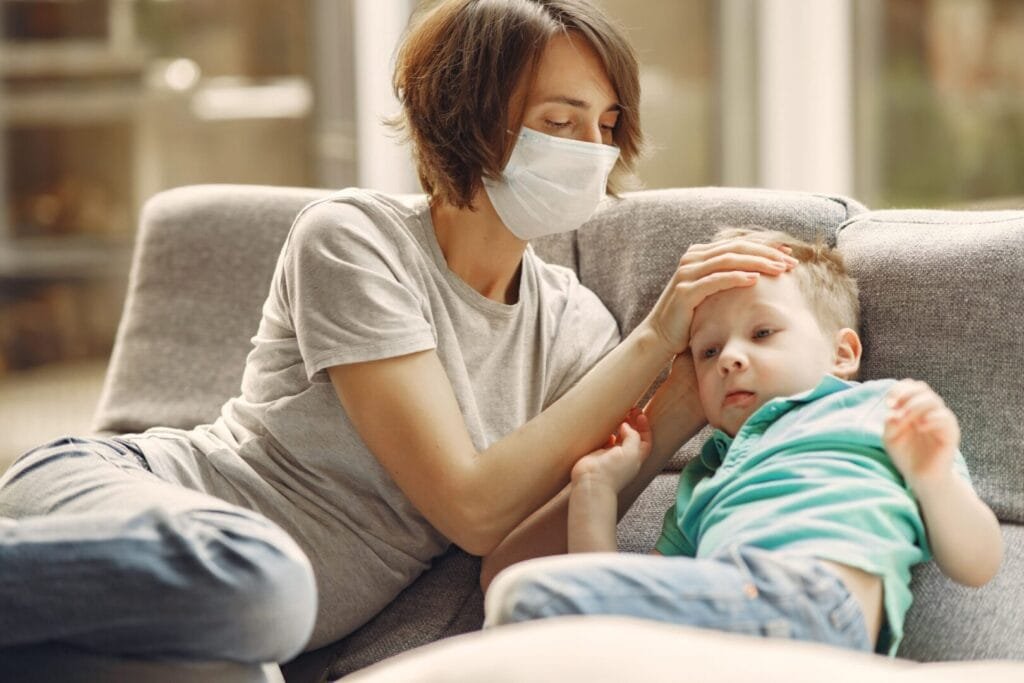
A guide to recognising the symptoms of chickenpox, understanding how the illness progresses, and knowing when medical advice may be needed.
What Are the First Signs of Chickenpox?
Chickenpox often begins before the rash appears. Many children experience mild flu-like symptoms for one or two days before developing the characteristic spots. Because these early symptoms can resemble many other childhood illnesses, chickenpox is often not recognised until the spots begin to appear.
A fever
Feeling tired or generally unwell
Loss of appetite
Headache
Aches and pains
Some children develop only very mild symptoms, while others may feel quite unwell before the rash becomes visible.
What Does the Chickenpox Rash Look Like?
The rash is usually the most recognisable feature of chickenpox. It often starts as small red spots that can appear anywhere on the body — these spots quickly develop into fluid-filled blisters before eventually drying out and forming scabs. New spots can continue appearing over several days, meaning it is common to see different stages of the rash at the same time.
The rash commonly affects:
- The face
- Chest and back
- Arms and legs
- Scalp
Some children may also develop spots inside the mouth or around the eyes.
The Stages of Chickenpox
Chickenpox typically follows a predictable pattern. Because new spots can continue to appear for several days, children often have a mixture of red spots, blisters and scabs present at the same time — this is considered normal during the course of the illness.
Stage 1
Red spots appear
Small red spots develop on the skin, which can appear anywhere on the body including the face, scalp, chest and limbs.
Stage 2
Blisters form
The red spots develop into small fluid-filled blisters. This stage is often extremely itchy and can be the most uncomfortable part of the illness.
Stage 3
Blisters dry and crust over
After a few days, the blisters begin to dry out and form scabs. Over time, the scabs fall away as the skin heals underneath.
How Long Does Chickenpox Last?
Most children recover from chickenpox within one to two weeks. The rash usually appears over a period of several days before gradually crusting over. Children are generally considered contagious from around two days before the rash appears until all blisters have formed scabs.
This is why children are usually advised to stay away from nursery, school and group activities until the rash has fully crusted over. The exact duration can vary from child to child, but most make a full recovery without any lasting problems.
Is Chickenpox Always Itchy?
For many children, itching is one of the most troublesome symptoms. The itch can range from mild to severe and may interfere with sleep, concentration and general comfort. Younger children often find it particularly difficult to avoid scratching.
Unfortunately, scratching can increase the risk of skin infections and may occasionally lead to scarring. Keeping fingernails short and following advice from a healthcare professional can help reduce the risk of complications.
When Should Parents Seek Medical Advice?
Most cases of chickenpox can be managed at home. However, medical advice should be sought if a child appears unusually unwell or develops symptoms that cause concern. While complications are uncommon, early assessment can be important when symptoms are severe.
Seek medical advice if your child
- Has difficulty breathing
- Appears unusually drowsy or difficult to rouse
- Has signs of dehydration
- Develops a very high fever
- Has skin that becomes increasingly red, swollen or painful around the blisters
- Has a weakened immune system
You should also seek medical advice if you are unsure whether the rash is actually chickenpox.
Caring for a Child With Chickenpox
Most children with chickenpox can be cared for at home with simple measures to help manage symptoms. Keeping the child comfortable and reducing the urge to scratch are among the most important priorities during the illness.
- Keep fingernails short to reduce skin damage from scratching
- Use loose, cool clothing to help with comfort
- Encourage regular fluid intake to avoid dehydration
- Use appropriate cooling lotions or antihistamines as advised by a pharmacist or clinician
- Keep the child away from nursery or school until all blisters have crusted over
A pharmacist or healthcare professional can advise on suitable over-the-counter products to help manage itching and discomfort.
What to Do Next
Chickenpox is a common childhood infection, and most children recover fully within a couple of weeks. Understanding how symptoms develop and recognising the different stages of the rash can help parents feel more confident if their child becomes unwell.
If you would like to learn more about chickenpox prevention or discuss whether Varilrix® vaccination may be suitable for your child, our team at The Kingston Pharmacy can help. We can provide personalised advice and answer any questions you may have about chickenpox vaccination and protection.