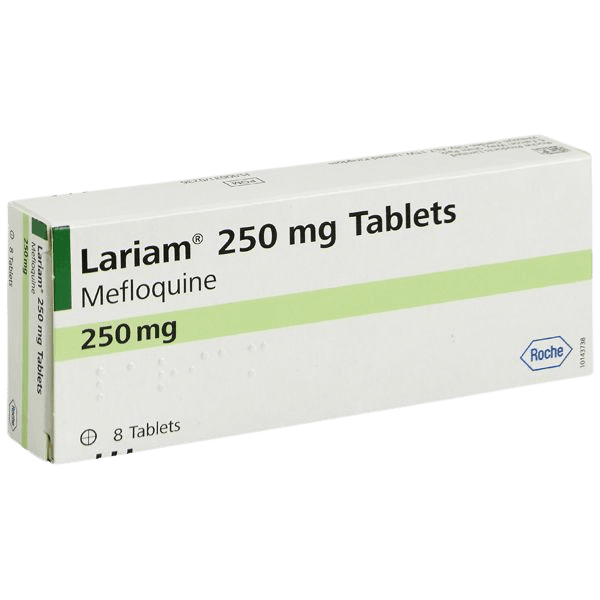
Lariam (Mefloquine) 250mg tablets
From £28.70
Best for travellers who prefer a weekly option instead of daily.
Rather speak to someone first? See our Malaria clinic →
Description
What is Lariam 250mg?
Lariam Tablets contain mefloquine hydrochloride 250mg, an antimalarial medication used to help prevent malaria in travellers visiting areas where malaria is present.
Mefloquine works by killing malaria parasites in the bloodstream, helping to prevent malaria infection following a mosquito bite.
Lariam is supplied following a travel health assessment to ensure it is appropriate for your destination, travel itinerary and medical history.
Available pack sizes
7, 8, 9, 10, 14 and 18 tablets.
How Does Lariam Work?
Lariam helps prevent malaria by destroying malaria parasites before they can cause infection.
The medication remains in the body for an extended period, allowing for convenient once-weekly dosing during travel and after returning home.
No antimalarial medication provides complete protection, so mosquito bite prevention measures should always be followed alongside treatment.
Who Can Use Lariam?
Lariam may be suitable for:
- Adults and children travelling to malaria-risk destinations
- Travellers requiring weekly malaria prevention medication
- Long-term travellers seeking a convenient dosing schedule
- Individuals visiting regions where mefloquine remains a recommended antimalarial option
Who May Not Be Suitable?
This treatment may not be suitable if you:
- Are allergic to mefloquine or related medicines
- Have a history of depression, anxiety disorders or other psychiatric conditions
- Have epilepsy or a history of seizures
- Have certain heart rhythm abnormalities
- Are taking medicines that may interact with mefloquine
Our clinicians will carefully assess your suitability before treatment is supplied.
How to Take Lariam
Typical Dosing Schedule
- Start treatment at least 2–3 weeks before travel
- Take one dose weekly on the same day each week
- Continue throughout your stay in the malaria-risk area
- Continue taking tablets for 4 weeks after leaving the malaria-risk area
- Take with food and plenty of water
Starting treatment several weeks before departure allows time to assess tolerance and identify any potential side effects before travel.
Always take Lariam exactly as directed by your prescriber.
Benefits of Lariam
- Effective malaria prevention for many destinations
- Convenient once-weekly dosing schedule
- Suitable for longer trips and extended travel
- Clinically established malaria prevention option
- Fewer tablets required compared with daily antimalarial medications
- Available following an online travel health consultation
Malaria Prevention Advice
Antimalarial medication should always be combined with mosquito bite avoidance measures, including:
- Using insect repellent containing DEET or other recommended ingredients
- Sleeping under mosquito nets where appropriate
- Wearing long-sleeved clothing during evenings and at night
- Staying in air-conditioned or screened accommodation where possible
Combining medication with bite prevention provides the best protection against malaria.
Possible Side Effects
Like all medicines, Lariam can cause side effects, although not everyone experiences them.
Common side effects may include:
- Nausea
- Dizziness
- Headache
- Sleep disturbances
- Vivid dreams
- Stomach upset
Less commonly, some people may experience mood changes, anxiety or other neuropsychiatric symptoms.
If you experience any unusual psychological symptoms while taking Lariam, seek medical advice promptly.
Always read the Patient Information Leaflet before taking treatment.
Frequently Asked Questions
Do I need malaria tablets for my destination?
Malaria risk varies depending on the country, region and type of travel. Our travel health team will assess your itinerary and advise whether malaria prevention is recommended.
When should I start taking Lariam?
Lariam should normally be started at least 2–3 weeks before entering a malaria-risk area.
How long do I continue taking treatment after travel?
You should continue taking Lariam for 4 weeks after leaving the malaria-risk area.
Can I stop taking tablets once I return home?
No. Completing the full course after travel is essential to ensure continued protection against malaria.
What happens if I miss a dose?
Take the missed dose as soon as you remember and continue your weekly schedule. If you are unsure what to do, seek advice from your pharmacist or prescriber.
Is Lariam suitable for long-term travel?
Yes. Lariam is often used for longer trips due to its convenient weekly dosing schedule, provided it is clinically suitable for the traveller.
Do I need a GP prescription?
Yes. Lariam is a prescription-only medicine but can be supplied without an GP prescription. At the Kingston pharmacy we can supply it following assessment by our qualified clinicians.
Our Travel Health Service
Before treatment is supplied, you will complete a travel health consultation.
During your assessment we may ask about:
- Countries being visited
- Areas within those countries
- Length of travel
- Previous medical history
- Current medications
- Previous reactions to antimalarial medication
- Any history of mental health conditions
Our qualified clinicians will review your information and determine the most appropriate malaria prevention option.
Once approved, you can choose between convenient home delivery or in-store collection.
Important Information
No antimalarial medication provides complete protection against malaria.
You should always follow mosquito bite prevention measures and seek urgent medical attention if you develop fever or flu-like symptoms during travel or after returning from a malaria-risk area.
Always read the Patient Information Leaflet before starting treatment.
Lariam may not be suitable for everyone. A full travel health assessment is required before treatment can be supplied.
Additional information
| Quantity | 7 tablets, 8 tablets, 9 tablets, 10 tablets, 14 tablets, 18 tablets |
|---|---|
| When to start | Start 2 weeks before travel |
| How long for | Continue for 4 weeks after travel |
| How often | One tablet once a week |
Related products
-

Melatonin 3mg Tablets
£25.00 Add to cart -
Malarone Paediatric 62.5mg/25mg tablets
From £24.00 Start Consultation This product has multiple variants. The options may be chosen on the product page -
Doxycycline 100mg capsules
From £24.05 Start Consultation This product has multiple variants. The options may be chosen on the product page -
Atovaquone/Proguanil Hydrochloride 250mg/100mg tablets
From £24.00 Start Consultation This product has multiple variants. The options may be chosen on the product page